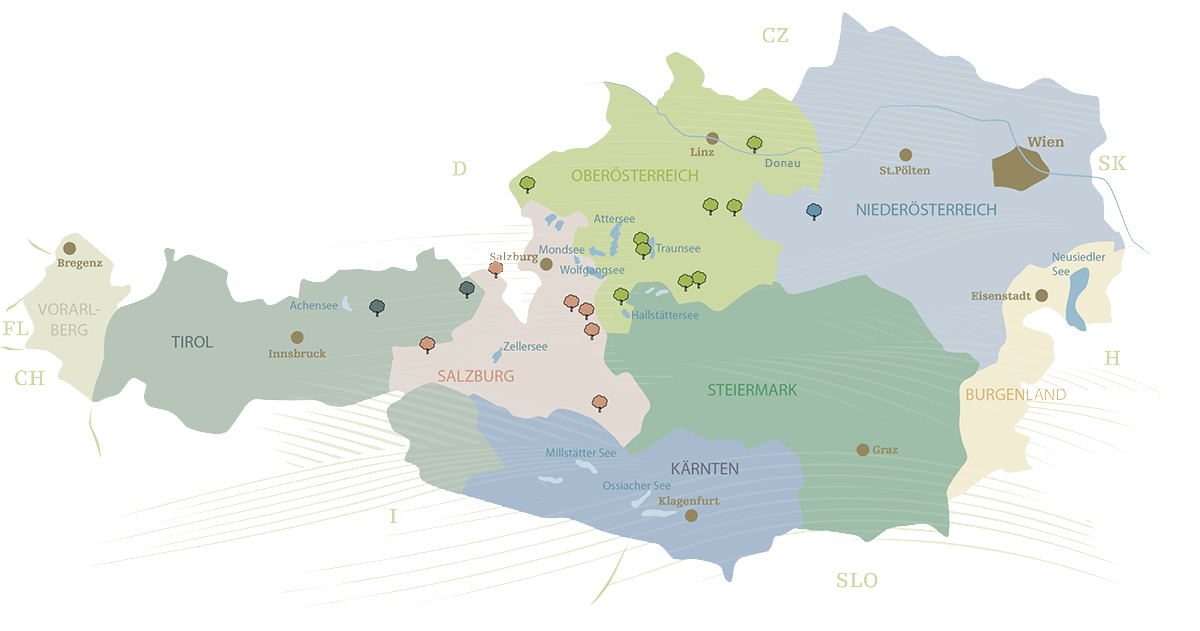





Schnell zum passenden Landhotel
Die schönsten Hotels
Post***S
Salzkammergut - Ebensee
Mitten im Herzen des Salzkammerguts, am Südufer vom Traunsee, liegt das 3-Sterne-Superior Landhotel.
Hier, vor der…
Kaserer ***
Bramberg - Bramberg
Umringt vom majestätischen Bergpanorama des Nationalparks Hohe Tauern liegt das Landhotel Kaserer direkt im gemütlichen…
Das Traunsee****s
Traunsee - Traunkirchen
Fernab jeglichem Alltags ist "Das Traunsee****s" ein idealer Ort für Menschen, die sich bewusst eine Auszeit von Stress…
Mader****
Steyr - Steyr
Am Zusammenfluss von Enns und Steyr, inmitten der österreichischen Romantikstraße, in der Nationalpark Kalkalpen-Region…
Stockerwirt ****
Pyhrn-Priel - Vorderstoder
Umgeben von einem malerischen Bergpanorama befindet sich das Landhotel Stockerwirt im idyllischen Bergdorf Vorderstoder…
Schütterbad ****
Salzburger Saalachtal - Unken im Saalachtal
Inmitten einer zauberhaften Bergwelt, einem Paradies für Erholungssuchende, Familien und Sportbegeisterte, finden Sie…
Gressenbauer***
Pyhrn-Priel - Hinterstoder
Auf einer kleinen Anhöhe eine Viertel Gehstunde vom Ort entfernt, abseits der Straße in sonniger Lage, mit Blick auf das…
Moorhof****
Franking Holzöster am See - Franking
Eingebettet in die zauberhafte Moorlandschaft des Alpenvorlandes spiegelt das Landhotel Moorhof**** die ganze Harmonie…
Traunstein ***
Tennengau - Abtenau
Ihr Hotel für die ganze Familie in Abtenau.
In diesem Hotel ist bestimmt für jeden etwas dabei. Großer Kinderspielplatz…
Landhotel Tirolerhof***
Wildschönau - Wildschönau
Hier, in der schönen Wildschönau in Tirol, genießen Sie einen rundum entspannten und erholsamen Urlaub. Die herrliche…
Presslauer ***
Nassfeld - Jenig
Nach dem Motto „Genießen – Abschalten - Die Seele baumeln lassen...“ erleben Sie auf sonniger Höh´ einen Urlaub der…
Agathawirt***
Dachstein Salzkammergut - Bad Goisern
Radfahren und Wandern im Salzkammergut.
Das Landhotel Agathawirt*** versteht sich als Experte für Ihren Rad- und…
Gafringwirt***s
Mostviertel - Euratsfeld
"G´sundheit - Sollst leb´n" - Traditioneller Mostviertler Trinkspruch
Inmitten des Obstgartens Mostviertel in…
Eichingerbauer**** Superior
MondSeeLand - St. Lorenz/Mondsee
In direkter Nachbarschaft zum idyllischen Mondsee gelegen und nur knapp 20 Minuten von Salzburg entfernt, hat das…
Strasserwirt ****
Kitzbüheler Alpen - St. Ulrich am Pillersee
Das Landhotel Strasserwirt**** im wunderschönen Pillerseetal ist sicherlich für Reitbegeisterte eine top Wahl und hat…
Forsthof****
Sierning - Sierning
Kulinarik, exquisite Weine, Golf und Kultur
Sagen Sie dem Alltag zwischendurch mal „leb wohl"! Nehmen Sie sich Zeit für…
Stofflerwirt ***S
Lungau - St. Michael/Lungau
Erholung UND Abenteuer? Ja, das geht. Denn im Lungau, der Sonnenregion im schönen Salzburger Land, liegt das idyllische…
Alpenhof ****
Filzmoos - Filzmoos
Wanderparadies und Skieldorado
Mitten im Salzburger Land liegt das wunderschöne „Bergdorf mit Herz“ namens Filzmoos mit…
Salzburger Dolomitenhof
Tennengau - Annaberg
Im Sommer mit Blick auf die Bischofsmütze beim Wandern und Biken oder im Winter im Skigebiet „Dachstein West“ beim Ski-…